

Introduction
The search referral era seems to be approaching its end as we enter the era of the “synthesised Web,” where a brand’s growth depends on being the source rather than the destination.
The effects are already visible (more on that below), and while there’s no shortage of “doom and gloom” commentary, having an actionable, deliberate strategy sounds like a better plan than a panic response.
Let’s look to the immediate future: Links are no longer the primary interface, answers are. Google search referrals to news publishers are down 38% in the United States and 33% globally. Media leaders expect another 43% decline over the next three years, with a meaningful share anticipating losses greater than 75%.
AI Overviews are a major driver. When they appear, click-through rates can decrease by more than 50%, and they currently only trigger on approximately 6% of news queries. At the same time, AI systems are crawling far more publisher content while sending back little traffic in return; crawl-to-refer ratios now reach tens of thousands-to-one.
Personally, I believe the solution is to operate effectively within an answer-first ecosystem and adopt a clear strategy that unfolds across three distinct dimensions.
1. Diversify
Search can no longer carry distribution alone.
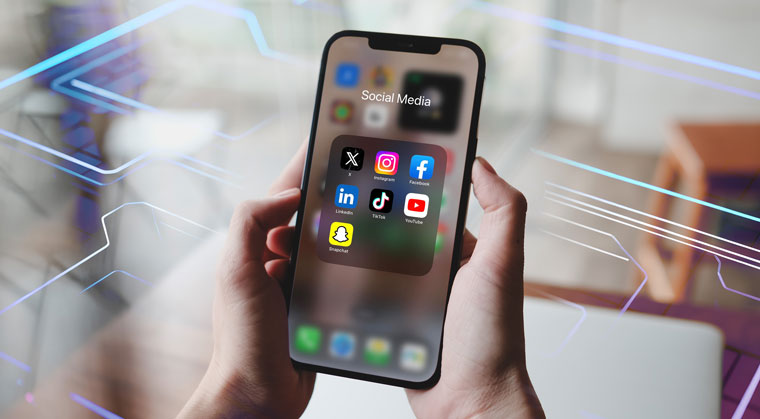
Publishers need to invest in formats and channels that do not depend on click-through. Video and social media are once again (still) necessary and forcing the transition from multi-channel (“a lot of Facebook, some Instagram, and a little bit of YouTube …”) to omni-channel (everything, everywhere, all at once) strategies.
From driving awareness” to “branding,” consultants have a lot of jargon to describe top-of-the-funnel activities. However, this is all meaningless if not paired with dedicated retention tactics focused on channels where you have more control: a newsletter sign-up, a registration option, a push notification subscription, an app download, etc.
In short, be where your readers are, no matter where they are.
Nota recommendation: Think beyond text-first publishing. The AI models powering search today, whether GPT-5 or Gemini 3, process information across multiple formats simultaneously. They parse video content, analyse images, and transcribe audio with the same sophistication they bring to written articles.
This means your video explainer, infographic, or podcast episode is primary source material that large language models (LLMs) actively reference when constructing responses.
Produce stories in formats that meet audiences wherever they’re searching, knowing AI systems will extract value from all of them. For a far more robust perspective on this, check out this commentary from Lily Ray.
2. Defend
Search still matters.
With fewer clicks available, execution matters even more. Technical search engine optimization (SEO), structured data, clean headlines, and clear summaries are table stakes for both ranking and AI inclusion.
It’s 2026 and there are still many search fundamentals best practices across the industry that aren’t optimised: Does your Web site actually pass core Web vitals?
Every search visit is more valuable than it was a year ago. There are a lot of SEO hanging fruits you should take advantage of to mitigate referral drop and optimise for future answer engine optimisation (AEO) benefits.
Nota recommendation: Treat your Web site as your single source of truth. When AI systems evaluate whether to cite your publication, they look for explicit, structured information about who you are and what you cover. Too often, critical details about a news organisation are buried in PDFs, hidden in image text, or wrapped in marketing language.
Publish clear, factual statements on your owned properties. This includes robust author bios that establish credentials, transparent editorial policies, and dedicated pages that demonstrate E-E-A-T principles: experience, expertise, authoritativeness, and trustworthiness.
Make your authority legible to the systems deciding whether you’re worth referencing.
3. Dive in
Assume AI is now the main distribution channel.
Publishers need to know how often their content is summarised, cited, or referenced inside AI interfaces. This is measurable, and it should be treated with the same care as search analytics. Appearing in an AI Overview may reduce click-through, but not appearing often means disappearing entirely. Visibility inside answers is becoming the new top of the funnel.
Nota recommendation: Start tracking how AI systems break down complex questions. When you ask an LLM a detailed question, it doesn’t just search once, it fragments your prompt into multiple targeted queries, searches each one separately, then synthesises the results. This process, known as query fan-out, represents a fundamental shift in how discovery works.
The good news is that several tools now make this behaviour visible. Google’s Gemini API exposes the exact search queries its model generates during grounding. Purpose-built tools like Queryfanout.ai let you simulate how a keyword expands into related facets. iPullRank’s Qforia reverse-engineers what Gemini searches for when answering specific prompts, and platforms like Profound track fan-out patterns across ChatGPT, Gemini, and Claude.
The mistake would be treating each fan-out query as a new keyword to target individually - that’s a trap. These queries are personalised, context-dependent, and constantly shifting. Instead, use them in aggregate to identify recurring themes and topic clusters.
If your coverage consistently addresses those clusters with depth and clarity, you’ll show up regardless of how the AI rephrases the question.
This isn’t about chasing dozens of micro-queries. It’s about understanding the underlying topics AI systems care about, then building authority around them.
Seeing in 3Ds
Search is not dead. But it is different.
The media companies adapting fastest will not be the ones chasing lost traffic. They will be the ones who diversify distribution, defend execution, and dive into AI visibility. AEO is not a single tactic. It is a shift in how discovery works. Seeing it in 3D is how you respond.
About Anntao Diaz
Anntao Diaz is director of product at Nota in Los Angeles, California, United States. Anntao can be reached at anntao.diaz@heynota.com.
This article was originally published by INMA.